Does dopamine reset — or does something else?
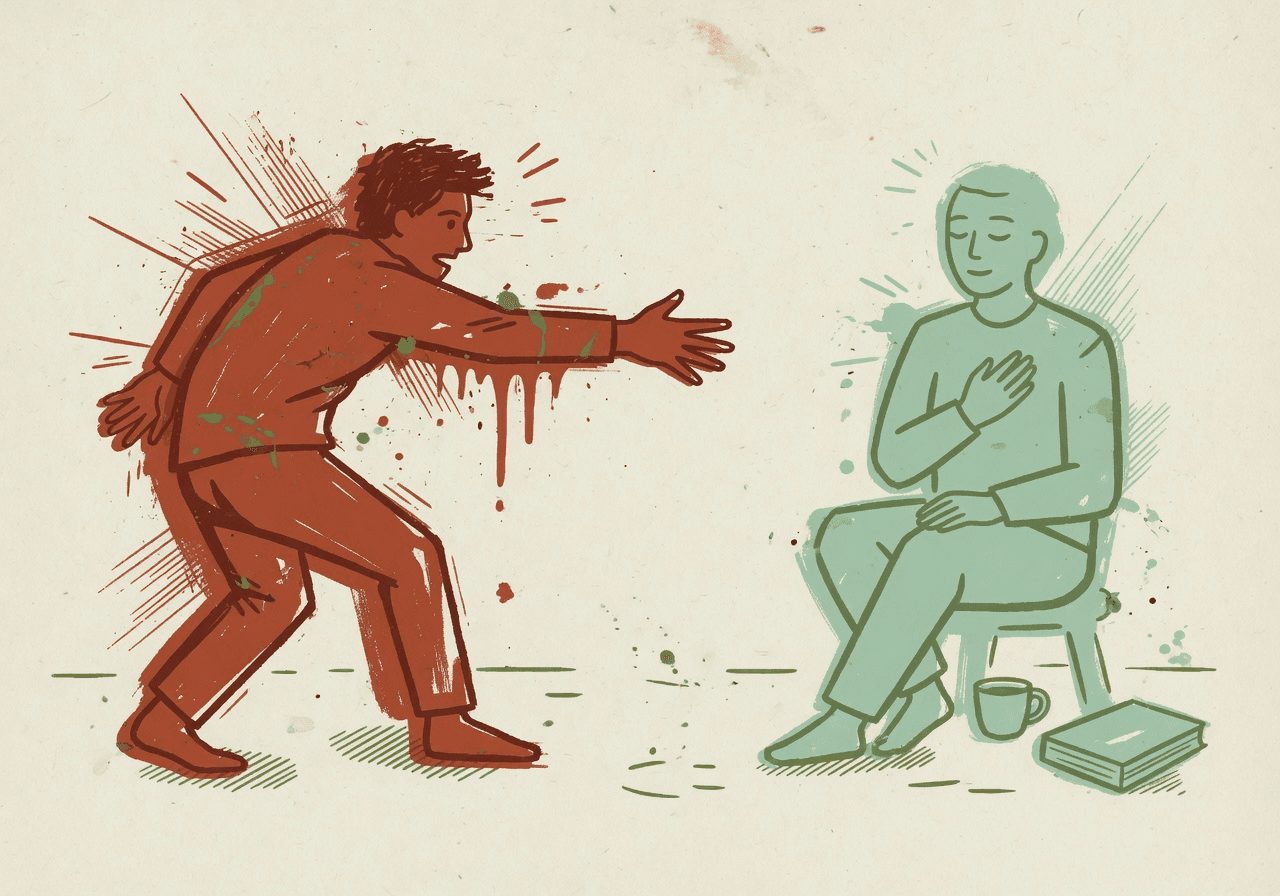
You've probably seen the headline before — "7-day dopamine detox", "reset your reward system", "hack your motivation". The phrase is everywhere, and the science underneath it is mostly wrong. Per the 2025 Annual Review of Psychology and the 2017 Nature Reviews Neuroscience review by Volkow, Wise & Baler, the dopamine system in your brain handles incentive motivation — the "wanting" signal — not pleasure itself. Pleasure ("liking") runs on smaller, fragile neural systems that don't depend on dopamine. The wellness-shelf phrase "dopamine = pleasure" confuses the two. And the fix the phrase implies — a "reset" — isn't how the underlying neuroscience works either. What does work: reduced stimulation + sleep + movement, each separately defensible. The framing called "dopamine detox" isn't necessary. Cameron Sepah, the Stanford psychiatrist who coined the term in 2019, told the New York Times the same year: "Dopamine is just a mechanism that explains how addictions can become reinforced, and makes for a catchy title." The CBT techniques underneath the term have evidence; the dopamine-specific reset claim does not (Fei et al. 2022, Lifestyle Medicine).
Is dopamine detox real?
Short answer: no. The peer-reviewed critique literature (Fei et al. 2022 in Lifestyle Medicine) reviews Sepah's original "Dopamine Fasting 2.0" guide and concludes that the dopamine-specific mechanism the term implies is not supported by neurobiology. The behavior changes attributed to "detox" are real — but they come from the underlying CBT-derived stimulus-control techniques (Sepah's framework borrows from established CBT exposure-and-response-prevention practice), not from anything the dopamine system itself "resets." Cleveland Clinic, Harvard Health, The Scientist, GoodRx, Calm Blog, and the broader consensus across consumer-health publishers all converge on the same point: the term is a catchy wrapper around techniques that work for separate reasons. This tool calls itself the "Dopamine Reset Forecast" because that's the cultural search-anchor people use when they want a personal answer. We use the wrapper to deliver the actual mechanism research, not to perpetuate the wrapper's claims.
How do I reset my dopamine?
You don't, technically — your reward attribution system recalibrates with reduced artificial-reward exposure over time. The peer-reviewed research suggests the same three or four levers, every time: sleep, reduced phone use (especially first thing in the morning), movement, and a modest cap on social media. What changes per person is the order. Per the 2012 Journal of Neuroscience study by Volkow and colleagues, sleep deprivation directly downregulates D2 receptor availability in the ventral striatum — the brain region central to incentive-salience attribution. Per Allcott et al. 2020 in the American Economic Review, a 4-week Facebook deactivation RCT (N=2884) produced significant subjective-wellbeing increases. The effects were 25-40% as large as some psychotherapy effects in reported magnitudes — and they persisted after the intervention ended. The 14-day forecast in this tool takes your 8 inputs and ranks 5 candidate levers against your specific pattern — the top lever often isn't the one you'd guess.
How long does it take to reset dopamine?
Behavior-pattern shifts emerge measurably within 1-2 weeks of reduced stimulation for many profiles. Aarestad et al. 2023 in SAGE Open showed that 3-day smartphone restriction produced measurable anxiety changes in moderate-to-heavy users (a day-1-2 phenomenon). Hunt et al. 2018 in the Journal of Social and Clinical Psychology showed that 3-week limiting of social media to ~30 min/day produced significant reductions in loneliness and depression. Allcott 2020's 4-week intervention is the gold-standard window. The 14-day forecast positioned by this tool sits between Aarestad's acute window and Allcott's full-effect window — early-onset, not full-magnitude. Individual onset timing varies widely; some patterns shift by day 5, some take the full 14 days, some take longer. The forecast is the modeled common-pattern timing, not a clinical prediction for your specific case.

What happens when you quit social media for two weeks?
Per Allcott 2020 AER, 4-week deactivation produced increased subjective well-being, reduced political polarization, reallocation of time toward offline socializing + watching TV, and — most importantly for the persistence question — a persistent reduction in post-experiment Facebook use. The new baseline tends to stick. The 14-day version is the early-onset portion of that arc. Per Hunt 2018 (3-week intervention, 30 min/day SM limit, N=143 University of Pennsylvania undergrads), measurable improvements appear within 3 weeks for limiting (not eliminating) use. The mechanism Robinson and Berridge describe in their 2025 Annual Review of Psychology — wanting/liking recalibration — provides the mechanism story: the wanting machinery that was over-trained on artificial reward starts attributing incentive-salience back to a wider range of stimuli (conversation, food, slow activities feel more vivid).
Are 4 dopamine types real?
The four archetypes (Overstimulated · Low-baseline · Chasing · Balanced) are a Planimora synthesis — they're positions on the wanting/liking 2×2 grid from Robinson and Berridge's incentive-sensitization framework, combined with the sensitization-state dimension folded into modulators. They are not a validated personality-test typology. There is no validated 4-archetype dopamine taxonomy in the scientific literature. What there is: the Berridge dissociation between mesolimbic dopamine ("wanting") and opioid-hotspot mediated hedonic experience ("liking"). What there is: the Volkow imaging work on D2 receptor downregulation under chronic high-stimulation conditions. What there is: the Allcott + Hunt + Aarestad intervention literature on phone-deprivation effects. We synthesized those into four common patterns and a per-pattern lever ranking. Each archetype card carries its Tier 1-2 source citation visible. Your archetype is an estimate of your current pattern, not a diagnosis — people often shift between patterns over weeks or months as stimulation, sleep, and movement contexts change. The transparent synthesis framing is the anti-quiz discipline this tool runs on: data-derived patterns with sources visible, not personality-test cuteness with proprietary mystery. Your dopamine reset is a pattern-shift to read, not a product to buy.