Why your fear has a shape (and what shape it is)
By Planimora Research · Reviewed May 2026
Most people misjudge which causes of death are common — sharks-and-cows is the famous example, but it's one of dozens. The miscalibration follows predictable patterns, so your fear has a recognizable shape. Play 15 rounds against 2023 US mortality data and discover yours.
The cows-and-sharks problem
Cows kill about 22 Americans every year. Sharks kill about 5. That ratio — four-to-one in favor of the livestock — has bounced around science writing for two decades as the canonical example of irrational fear. Most people, asked which is more dangerous, will say sharks. They will say it with confidence. They will not believe the cow number until they look it up.
This is funny, but the funny part is also the diagnostic part. The cow-vs-shark gap isn't a random error. It's a symptom of a deeper pattern that researchers have been measuring since the 1970s — and that pattern, the way our intuitions about death systematically miss the data, has a shape.
A 1978 study you've probably never read
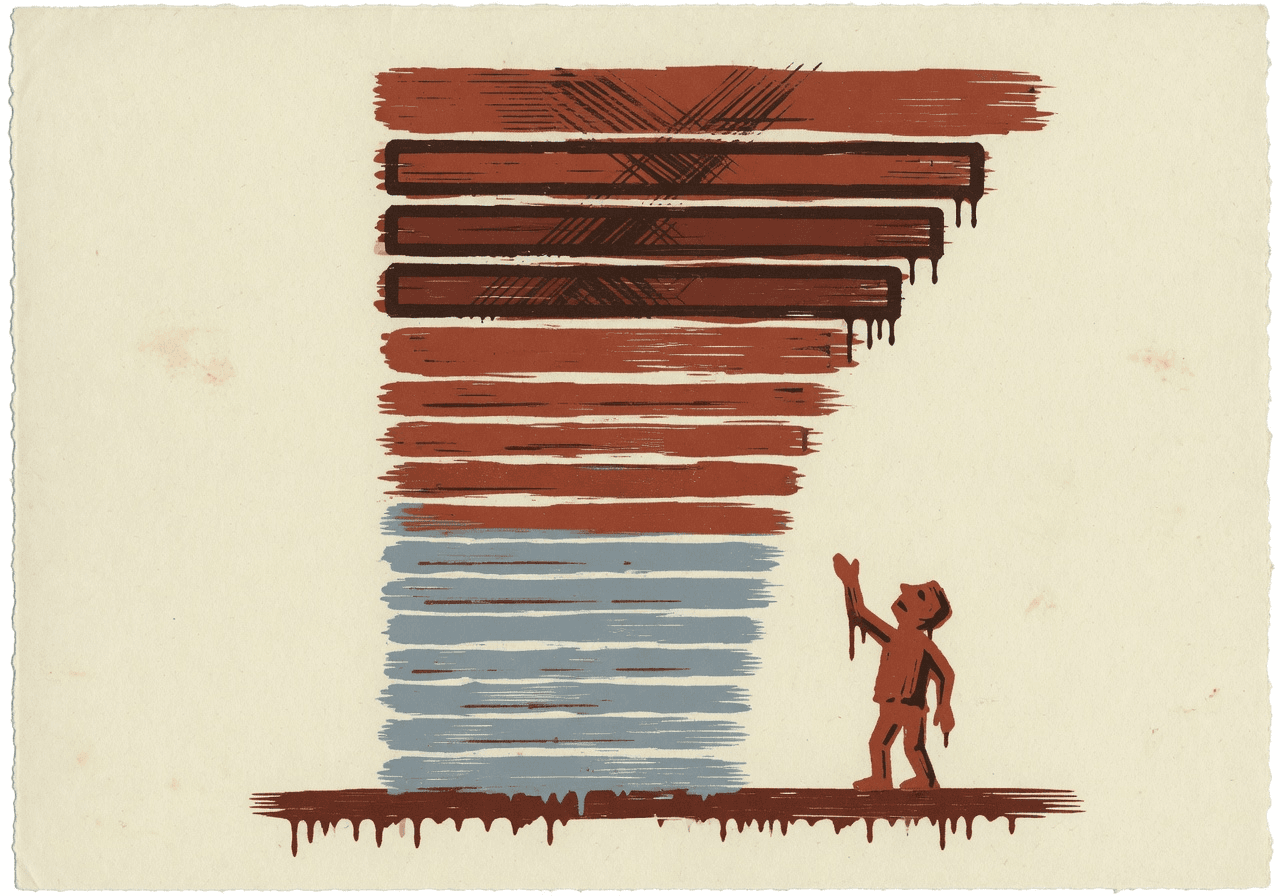
In 1978, a small team of psychologists — Sarah Lichtenstein, Paul Slovic, Baruch Fischhoff, and two colleagues — asked 660 American adults to estimate how often various causes of death occur. They covered 41 different causes: car accidents, lightning strikes, drowning, heart disease, asthma, homicide, suicide, fireworks, bee stings, tornadoes, the whole roster.
The results were not subtle. People judged accidents and disease as roughly equal in frequency. The actual ratio is 1 to 16 in favor of disease. People thought homicide killed more people than suicide. Suicide kills about twice as many. Errors exceeded 25 percent on a majority of comparisons, and the errors weren't random distribution noise. They were systematic. Different subjects got the same wrong answers in the same direction.
Lichtenstein and colleagues pointed at what Kahneman and Tversky had described five years earlier: the availability heuristic. Our brains use how readily we can recall an example as a stand-in for how often it happens. Dramatic deaths — homicide, tornadoes, plane crashes — show up on the news and stay in memory. Mundane deaths — stroke, diabetes, falls — don't. The heuristic is cognitive shortcut taking over a job that requires a database.
What "available" actually means in your head
A few years ago, Our World in Data ran an experiment of their own. They counted how often the New York Times, Washington Post, and Fox News covered different causes of death over a year, and compared coverage to actual US mortality data. Heart disease, which causes about 32 percent of deaths, gets 7 percent of coverage. Terrorism, which causes around 0.01 percent of deaths, gets 36 percent of coverage. The over-representation ratio for terrorism is about 18,000 to 1.
Read that number again. We see 18,000 times more news per terrorism death than per heart-disease death. Our brains aren't broken — they're working as designed, calibrating to the input they receive. The input itself is wrong. We're being fed a distorted picture of risk, and we're remembering it accurately.
The patterns repeat
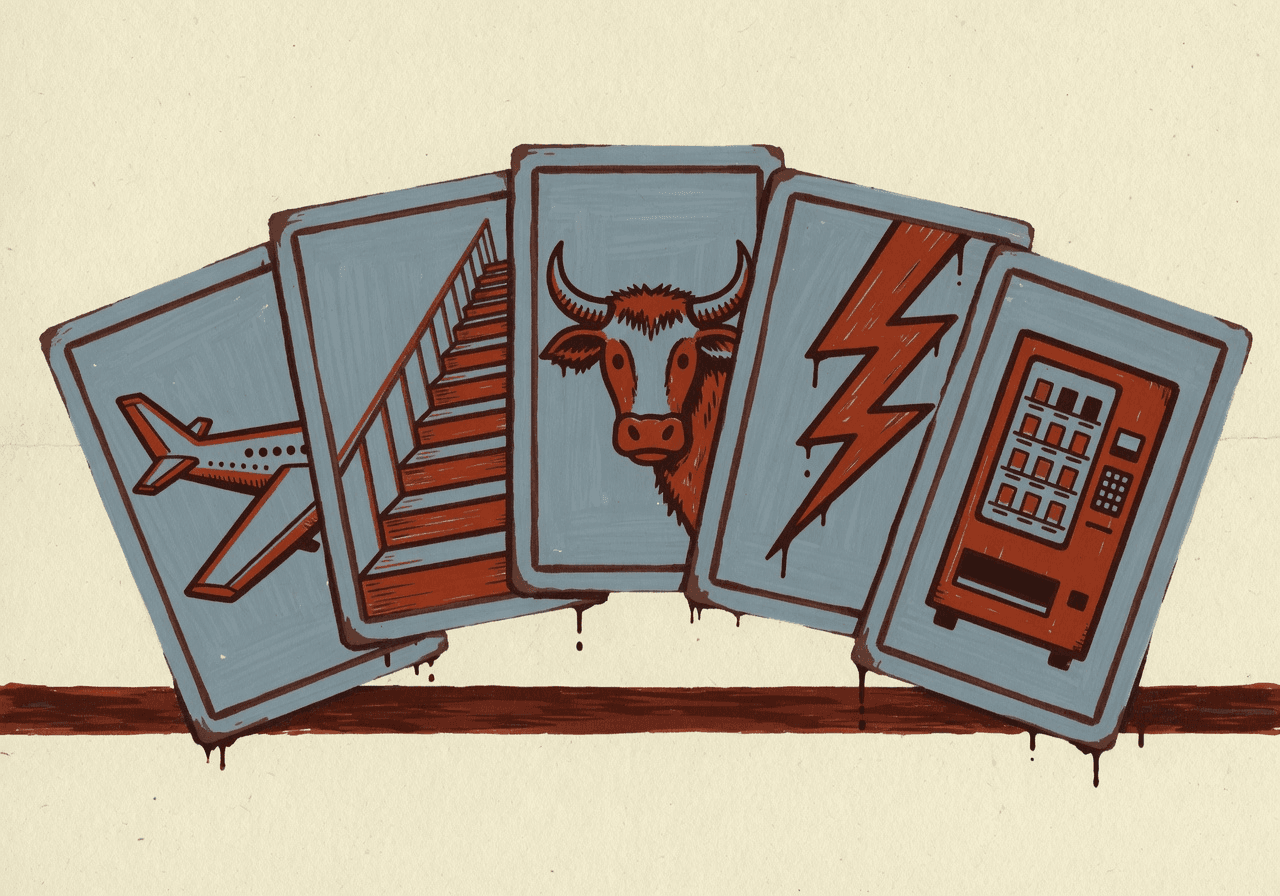
If miscalibration were random, the field wouldn't be interesting. Two people would each be confused about a different set of things, and we couldn't say much beyond "humans are bad at this." But the patterns are not random. They cluster.
People who live in cities tend to under-rate home accidents (falls down stairs, kitchen fires, bathtub drownings) and over-rate exotic threats they encounter mostly through media. People who fly often over-rate plane risks even though they have direct evidence of how routine flights are. Rural folks under-rate certain animal risks because the animals are familiar and harmless 99 percent of the time, but over-rate the dramatic-but-rare ones.
The Stupid Death Probability game taps this clustering. The 100 pair-comparisons in its pool are distributed across five categories: animals, travel, home, nature, and modern life. After 15 picks, the category where you missed most names your archetype. The Animal Phobic over-rates exotic animals. The Travel Worrier over-rates planes-trains-cars. The Home Doomer under-rates the staircase. The Nature Naive misses lightning and drowning. The Modern-Life Anxious over-rates selfies, vending machines, and the weird-deaths beat of the internet.
The modifier is the second dimension. Were you SURE on your misses, or were you GUESSING? Confident-and-wrong is a different shape from cautious-and-wrong. It's the difference between an information gap (you didn't know) and a confidence gap (you knew, but knew the wrong thing). The tool surfaces both.
A wrinkle from 2024
A 2024 paper by the German cognitive scientist Thorsten Pachur, published in Cognition, did a Bayesian re-analysis of Lichtenstein's 1978 data plus a systematic review of replication studies. Pachur's headline finding is contrarian: across the aggregated datasets, the strong systematic bias that Lichtenstein measured doesn't replicate cleanly. Media coverage IS strongly distorted toward dramatic causes — that part holds up — but ordinary people's frequency judgments may not be as miscalibrated as the famous story claims. People rely on social-network examples as much as on media.
This doesn't undo the tool's value. Whether or not the population-level bias is exactly what we thought, your individual calibration is still measurable. You can play 15 rounds and find out where your intuition is sharp and where it drifts. The interesting question is the personal one, not the universal one.
What this is for
The game doesn't tell you to be afraid of different things. It doesn't recommend you avoid cows or take up shark cage diving. It doesn't say you should change your behavior. It shows you the shape your fears already have — which is its own kind of useful information.
Most personal-insight tools work by giving you a number and an instruction. Sleep eight hours. Save twenty percent. Eat the vegetables. The Stupid Death Probability game gives you a number and stops there. The shape is the take-away. What you do with it is yours.
Find your card. Share it if it makes you laugh. Or don't — close the tab a little better-calibrated.
Reviewed by Planimora Research · Last reviewed: 2026-05 against CDC WONDER 2023 + NSC Injury Facts 2024 + Lichtenstein 1978. Updated quarterly.